The many different names used to describe data centers, based on their characteristics and function or industry ratings and certifications, can overlap and cause confusion. Understanding the distinctions is key to grasping the broader data center landscape.
In This Article
- What is a hyperscale data center?
- What is a cloud data center?
- What is a colocation data center?
- What is an enterprise data center?
- What is an edge data center?
- What are data center tiers?
- Other ways to classify a data center
- Fluke Networks has you covered
- Keep learning
What is a hyperscale data center?
Hyperscale data centers are enormous facilities owned by major tech companies like Google, Amazon, Meta, Microsoft, and others. Tencent, Huawei, Alibaba, and Baidu are well-known hyperscalers in the Chinese market. These companies, often called "hyperscalers," use these data facilities to power their vast cloud services.
What sets hyperscale facilities apart is their immense size and scale, housing tens of thousands of servers and occupying millions of square feet of space. They are designed to handle large-scale workloads for services like social media, video streaming, and artificial intelligence (AI). Many also offer various "as a service" solutions, providing scalable and on-demand platforms, software, infrastructure, and storage to businesses.
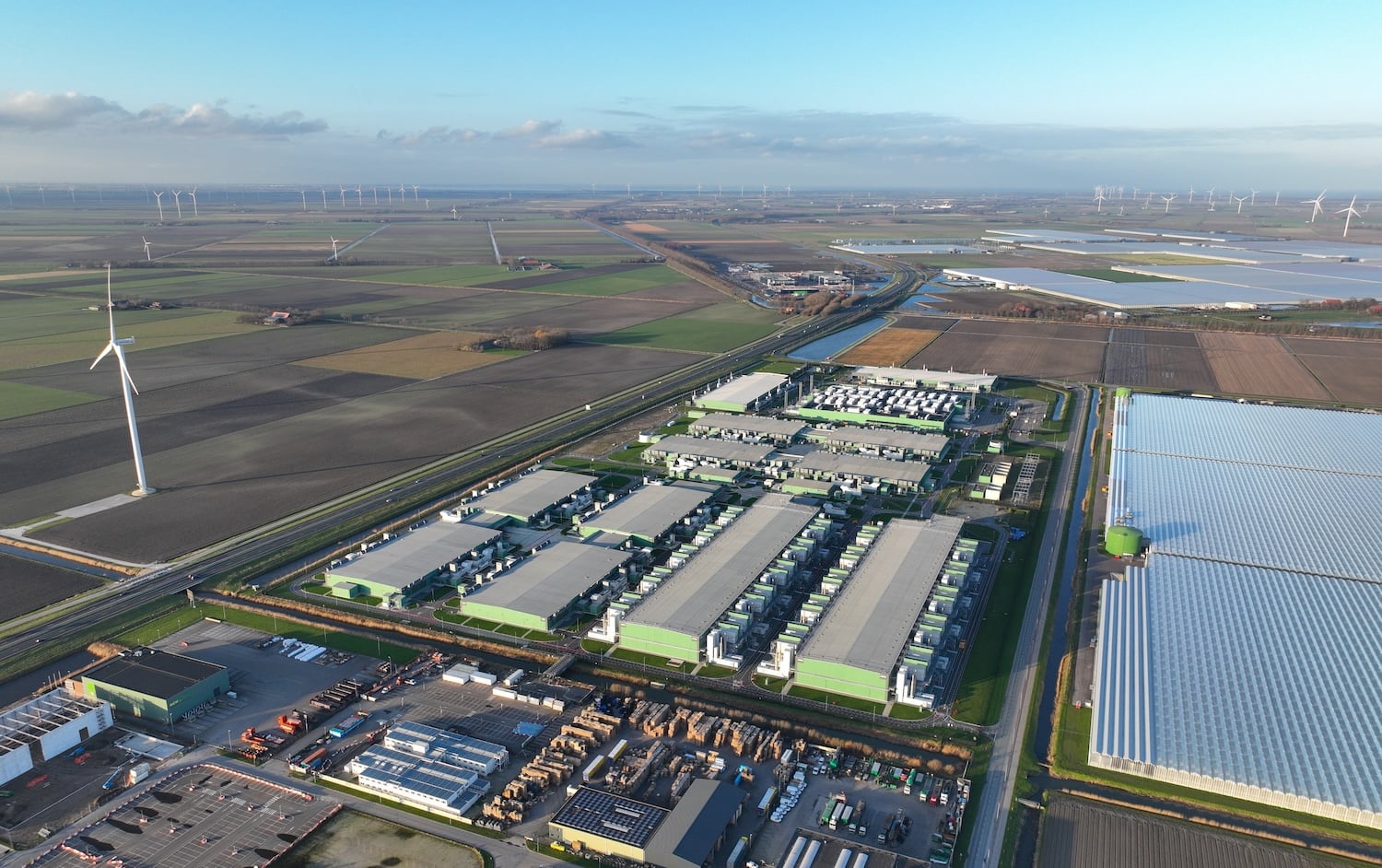
Hyperscale data centers are differentiated by their immense size and scale, housing tens of thousands of servers and occupying millions of square feet.
Although hyperscale data centers make up less than 10% of all data centers globally, they are massive power consumers. They consume 100 megawatts or more annually, with some reaching gigawatt levels of power demand. They are estimated to account for 60 to 70% of all U.S. data center power consumption. Such high power usage makes advanced cooling and sustainability initiatives a critical focus for these facilities. In terms of infrastructure, hyperscale data centers support next-generation 400-gigabit and 800-gigabit speeds, and their networks feature extensive fiber cabling that can reach tens of thousands of miles in length.
What is a cloud data center?
A cloud data center is a facility that provides cloud services to customers over the internet. The cloud provider owns and manages the servers, networks, and storage, and businesses pay to use them when needed. While hyperscale data centers are a type of cloud data center, not all cloud providers are considered hyperscalers.
Many smaller providers offer specialized cloud-based applications and services. For example, Salesforce is a cloud provider that offers software-as-a-service for customer relationship management (CRM). Others focus on storage, archiving, cybersecurity, and software development for startups and small to medium-sized businesses. A newer, specialized cloud data center is the neocloud, a facility that provides high-performance computing infrastructure for AI workloads. Unlike hyperscalers that offer a wide range of services, neoclouds are specifically designed to support AI, often providing GPU-as-a-service for AI developers.
What is a colocation data center?
A colocation data center, often referred to as a multi-tenant data center or simply a colo, is a facility where multiple businesses rent space to house their servers and other IT equipment. Instead of building and maintaining their own data centers, enterprise companies like financial institutions, healthcare providers, and e-commerce companies often lease colo space to reduce costs, improve reliability, and enhance scalability. It's also a popular choice for disaster recovery. A colocation tenant could also be a cloud service provider (including a hyperscaler) needing space for specialized applications or proximity to customers, or a managed service provider (MSP) that handles day-to-day IT tasks for other organizations.
Colocation providers, such as CyrusOne, Digital Realty, QTS, and Equinix, typically offer tenant space by the rack, cabinet, cage, or even an entire suite or data hall. In turn, the colocation provider ensures adequate infrastructure to support their customers' needs, including power, cooling, bandwidth, and security. Some colocation providers also offer hybrid cloud infrastructure to tenants, offering direct access to cloud-based services.
The type of colocation data center often depends on its purpose and the size of the rented space. A retail colocation tends to have smaller racks or cages, while a wholesale facility leases large blocks of space to a single customer. The term "carrier hotel" is often used to describe a colocation facility that focuses on connecting customers to various network service providers, such as AT&T or Verizon. A critical feature of a colocation data center is the meet-me room (MMR), a centralized space with fiber cross-connects that acts as a hub for customers to connect to one or more carriers.
What is an enterprise data center?
An enterprise data center is a facility owned and operated by a single organization to support its specific business needs. These private facilities may be located on premises alongside other business operations or at a separate off-site location. Many organizations today use a hybrid approach where they house sensitive or critical IT resources within their own enterprise data centers, while leveraging cloud-based services for storage and common business applications.
Smaller businesses with limited resources may choose to work with a third-party MSP to handle their data center operations and day-to-day IT tasks. In this scenario, the IT equipment may be owned or leased by the organization. Some MSPs own and operate their own managed services data centers on behalf of an organization, while others may occupy space within a colocation data center. Due to the diverse ways in which organizations today approach IT, the term "enterprise data center" can be confusing, as it can refer to a company-owned facility, a space managed by a third party, or a hybrid of the two.
What is an edge data center?
Edge data centers bring computing and data processing power closer to end users and devices to reduce latency, which is essential for real-time applications like self-driving vehicles, smart traffic systems, machine-to-machine communications, and virtual and augmented reality.
While edge data centers are typically smaller, decentralized facilities, their size can vary from one rack to as many as 50. They may be owned by a telco, a cloud provider (including hyperscalers), an enterprise organization, or a specialized edge infrastructure company. Edge data centers are also located in diverse settings — at the base of a 5G cell tower, in a colocation data center, or on premises to serve an enterprise business, industrial site, retail site, or transportation hub. Some central offices are being repurposed as edge data centers, which is called a central office re-architected as a data center (CORD). This allows telcos to transform their central offices to deliver 5G, IoT, and other edge computing services.
Edge data centers with only one or two racks are often called micro data centers. Because edge data centers are sometimes housed in purpose-built, portable shelters, they may also be referred to as modular or containerized data centers. While an edge data center can be micro, modular, or containerized, the key distinction is its purpose: to bring processing closer to the source of data. Therefore, not all micro, modular, or containerized data centers are edge data centers.
What are data center tiers?
In addition to the many types, data centers are often classified as Tier I, Tier II, Tier III, or Tier IV (not to be confused with Tier 1 or Tier 2 certification testing). This rating system, established by the Uptime Institute, is based on a data center's capacity, redundancy, and fault tolerance, which determines its availability and allowable downtime.
- Tier I: Basic level 99.671% availability and up to 28.8 hours of annual downtime. These facilities are designed for office IT, with protection against disruptions from human error and the ability to shut down completely for maintenance and repairs. However, they are not protected against unexpected failure or outage.
- Tier II: Redundant capacity with 99.749% availability and 22.7 hours of annual downtime. These facilities provide better maintenance opportunities and safety against disruptions for more critical environments, with the ability to remove components without shutting down. However, an unexpected shutdown could affect the system.
- Tier III: Concurrently maintainable with 99.982% availability and just 1.6 hours of annual downtime. Unlike Tier I and Tier II, any part of a Tier III data center can be shut down without impacting its operation.
- Tier IV: Fault-tolerant with several independent and physically isolated systems that act as redundant capacity components and distribution paths, providing 99.995% availability with just 25 minutes of annual downtime. A Tier IV data center will not be affected by a disruption from planned and unplanned events.
Some companies have also developed their own "Tier V" rating that meets and exceeds the requirements of the Uptime Institute's Tier IV and includes an added focus on sustainability. Note that while hyperscale and cloud data centers are often referred to as Tier IV or Tier III, respectively, since they are designed to meet those specifications, any data center type can technically be certified as any of the four tiers.
Other ways to classify a data center
Beyond the well-known Uptime Institute tiers, several other standards rate data centers based on their redundancy, reliability, and compliance.
- BICSI: The ANSI/BICSI 002 data center standard categorizes data center facilities from Class F0 (basic, non-redundant) to Class F4 (fully redundant, fault tolerant), with each class defining specific redundancy, availability, and downtime allowances.
- The Telecommunications Industry Association (TIA): TIA offers a certification program based on the TIA 942 data center standard, classifying data centers into four levels of increasing resilience and infrastructure reliability: Basic, Redundant Capacity Component, Concurrently Maintainable, and Fault Tolerant.
- EN 50600: The European EN 50600 standard also classifies data centers as Class 1, Class 2, Class 3, or Class 4 based on their availability levels.
In addition to ratings based on specific standards, some data center certifications focus on security and compliance. Data centers handling healthcare-related information are typically certified to HIPAA privacy standards, while those serving the financial industry may be certified to the Payment Card Industry Data Security Standard (PCI DSS) for handling payment card data. Service Organization Control (SOC) compliance is also common for cloud data centers, with SOC 1 covering financial reporting and SOC 2 covering security, processing, integrity, availability, and privacy controls.
Fluke Networks has you covered
Regardless of its type, rating, or certification, every data center relies on a robust cabling infrastructure to function. The integrity of the connectivity between switches, servers, storage area networks (SANs), and other active equipment is paramount to maintaining operation.
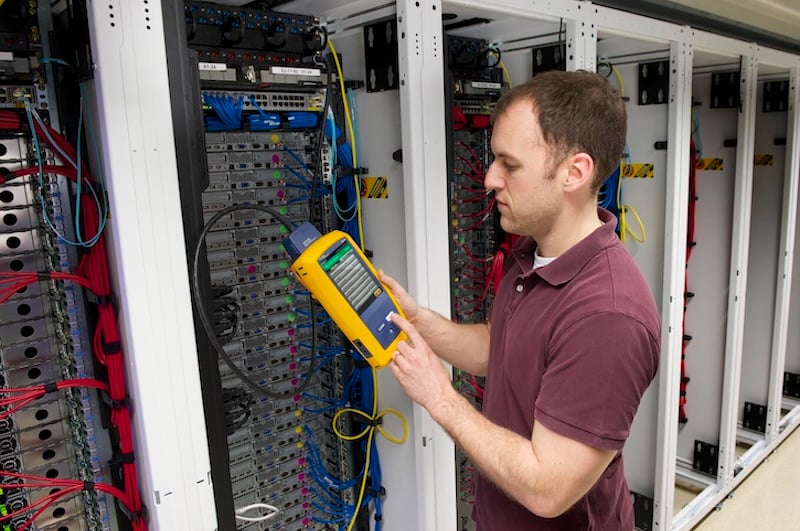
Regardless of data center type, rating, or certification, Fluke Networks offers the tools you need to verify the performance of critical links.
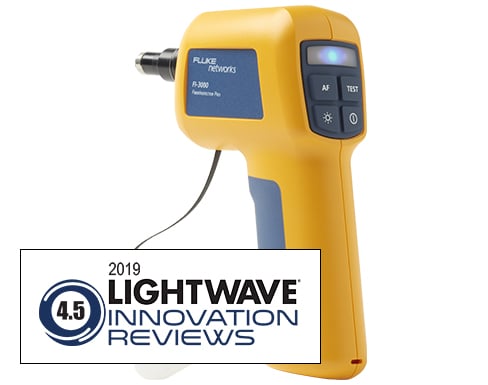
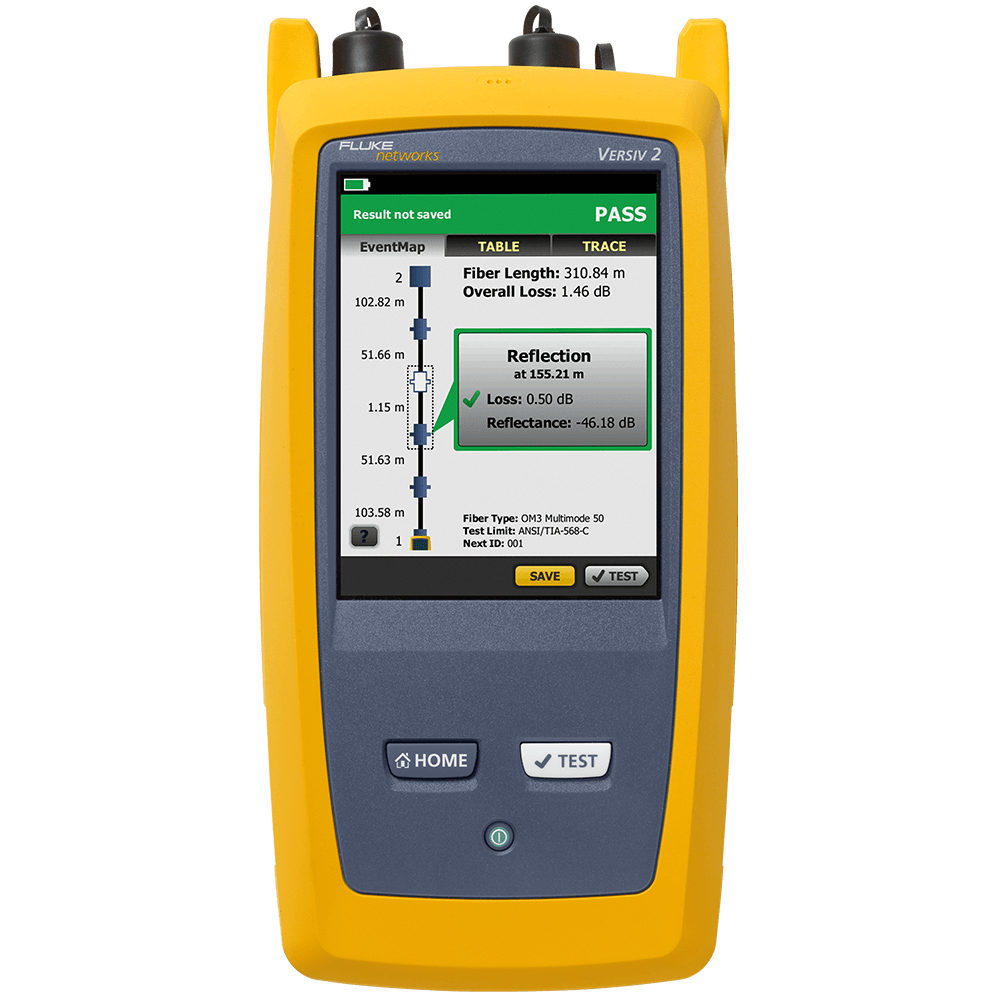
Fluke Networks offers the tools you need to make sure your data center links meet required standards for performance, reliability, and availability. Our suite of solutions provides comprehensive support for all your data center testing needs — from fiber inspection and cleaning to certification, troubleshooting, and documentation. With Fluke Networks, you can be confident that your data center's foundation is solid, secure, and ready to meet the demands of today and tomorrow.
Fluke Networks offers complete, ready-to-go data center kits for installation, maintenance, and failure readiness when you need it most.
Check out Fluke Networks instrument and accessory kits